Deep dives into AI code intelligence, security best practices and the future of automated code review.
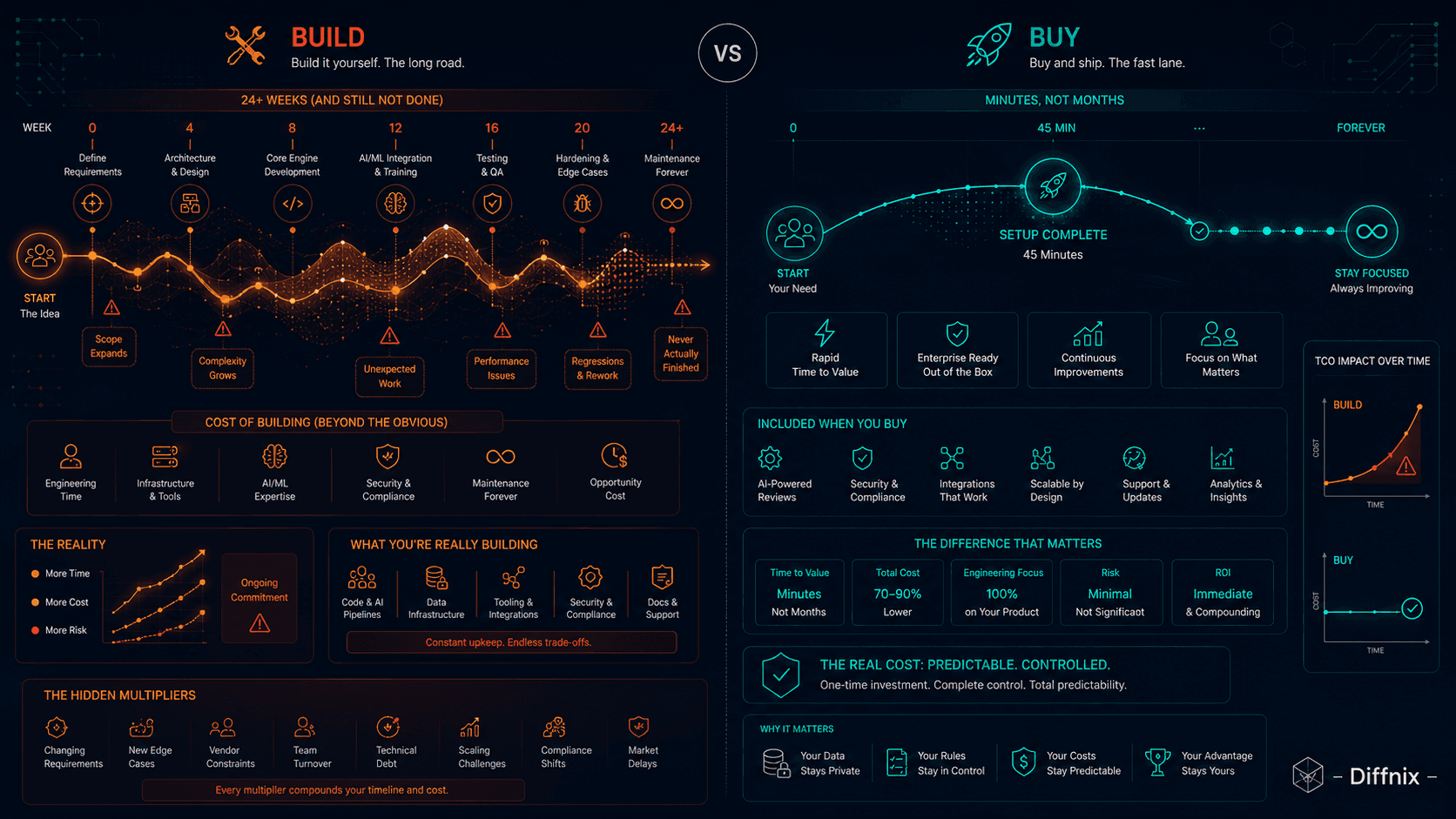
We built Diffnix from scratch. That means we know every hidden cost in the build path, every place where the scope expands unexpectedly, and every decision that seemed simple in week one and became a maintenance obligation in month six. This is the breakdown so you can make the right call before committing six months of your best engineers' time.
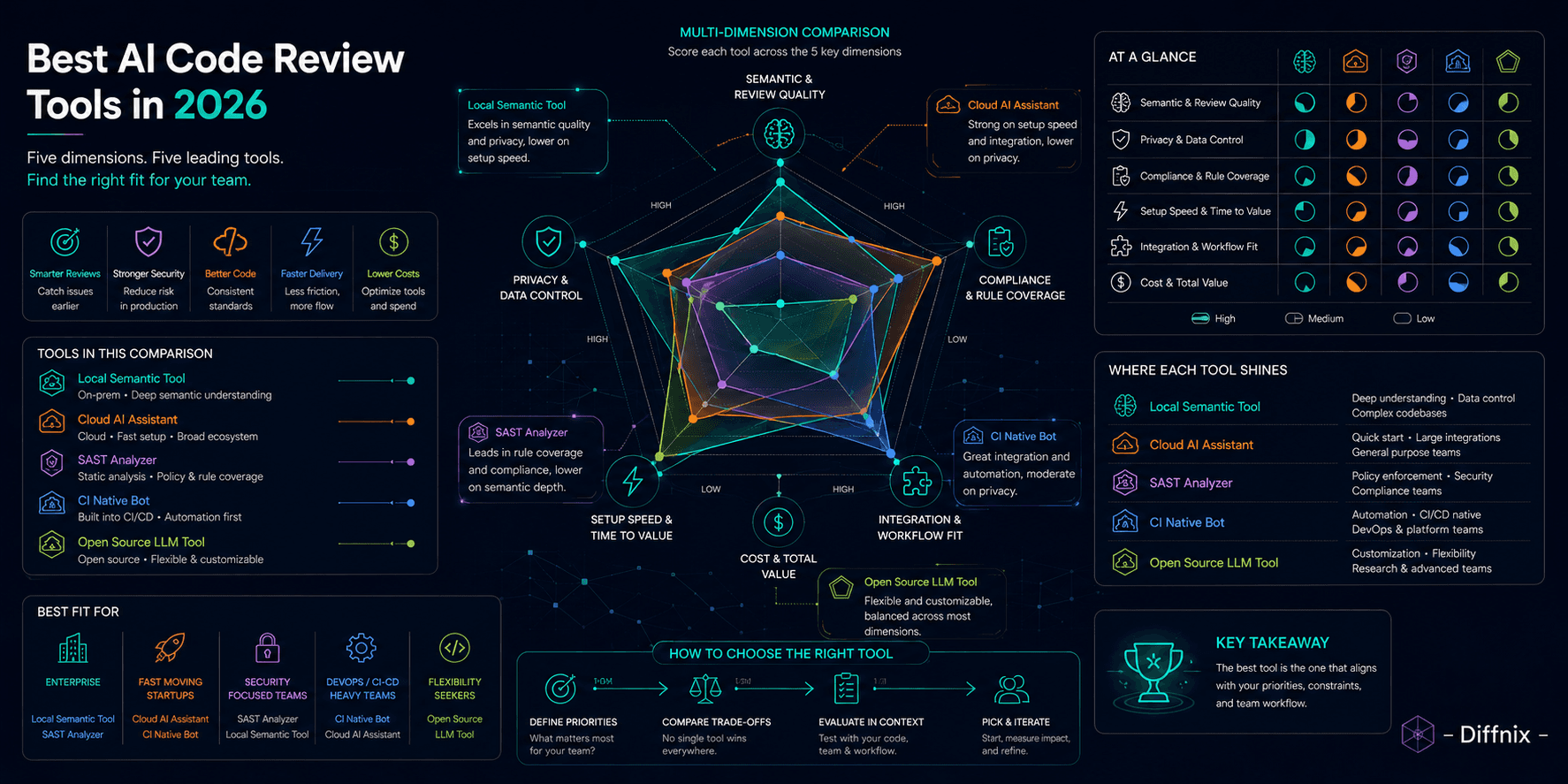
We benchmarked AI code review tools against real PR workflows across three evaluation teams, not cherry-picked demos. This is what the tools actually did on real code, including where the cloud tools performed well, where SAST-based tools hit their ceiling, and where local semantic analysis made the difference.
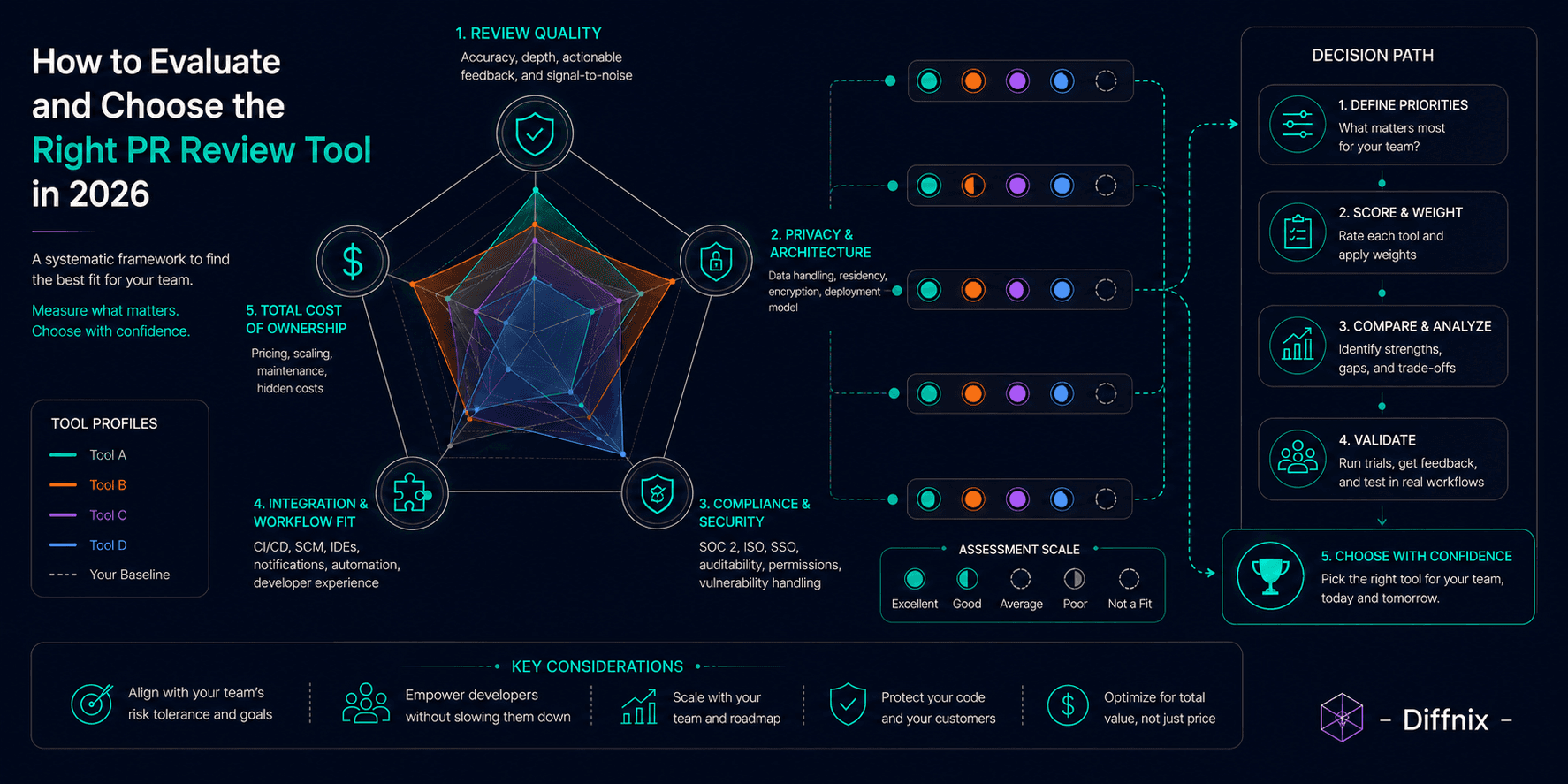
Buying an AI code review tool in 2026 means choosing between a dozen options with very different architectures, privacy models, and quality profiles. Most teams make the decision based on which tool has the smoothest onboarding. Most regret it. This guide gives you the framework to evaluate tools systematically before you commit.
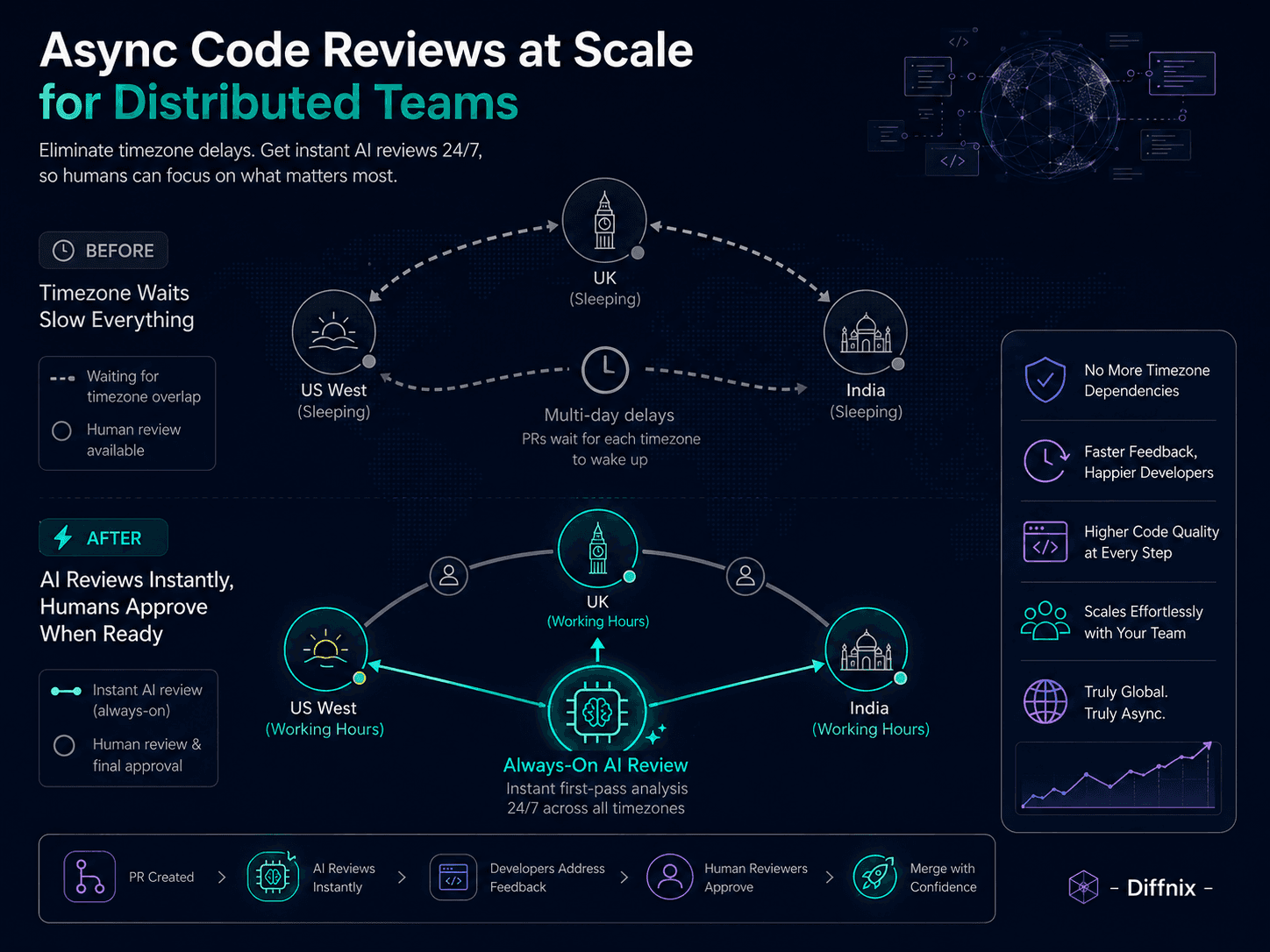
A reviewer who is asleep cannot unblock a developer who is not. For distributed engineering teams, PR wait time is mostly timezone overhead, not reviewer capacity. This post explains the async review problem, what AI first-pass review does to the timezone gap, and how one three-timezone team cut time-to-merge from 2.8 days to 1.1 days without changing headcount.
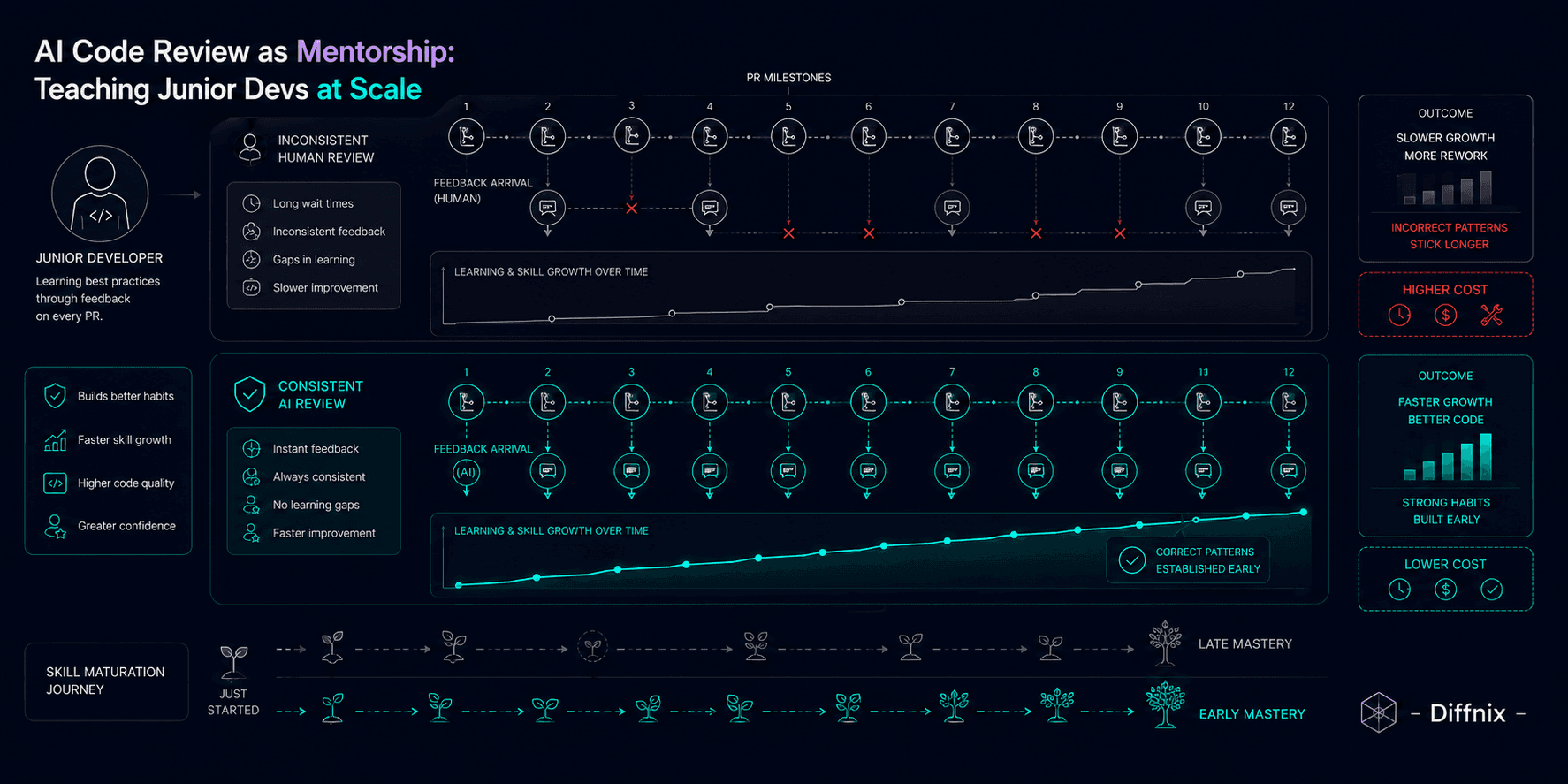
Junior developers learn fastest from immediate, specific, consistent feedback on their actual code. Senior engineers rarely have the bandwidth to provide that feedback at the frequency it needs to happen. This post explains how AI code review fills that gap, what the learning arc looks like with consistent feedback, and why it is more effective than periodic mentorship sessions.
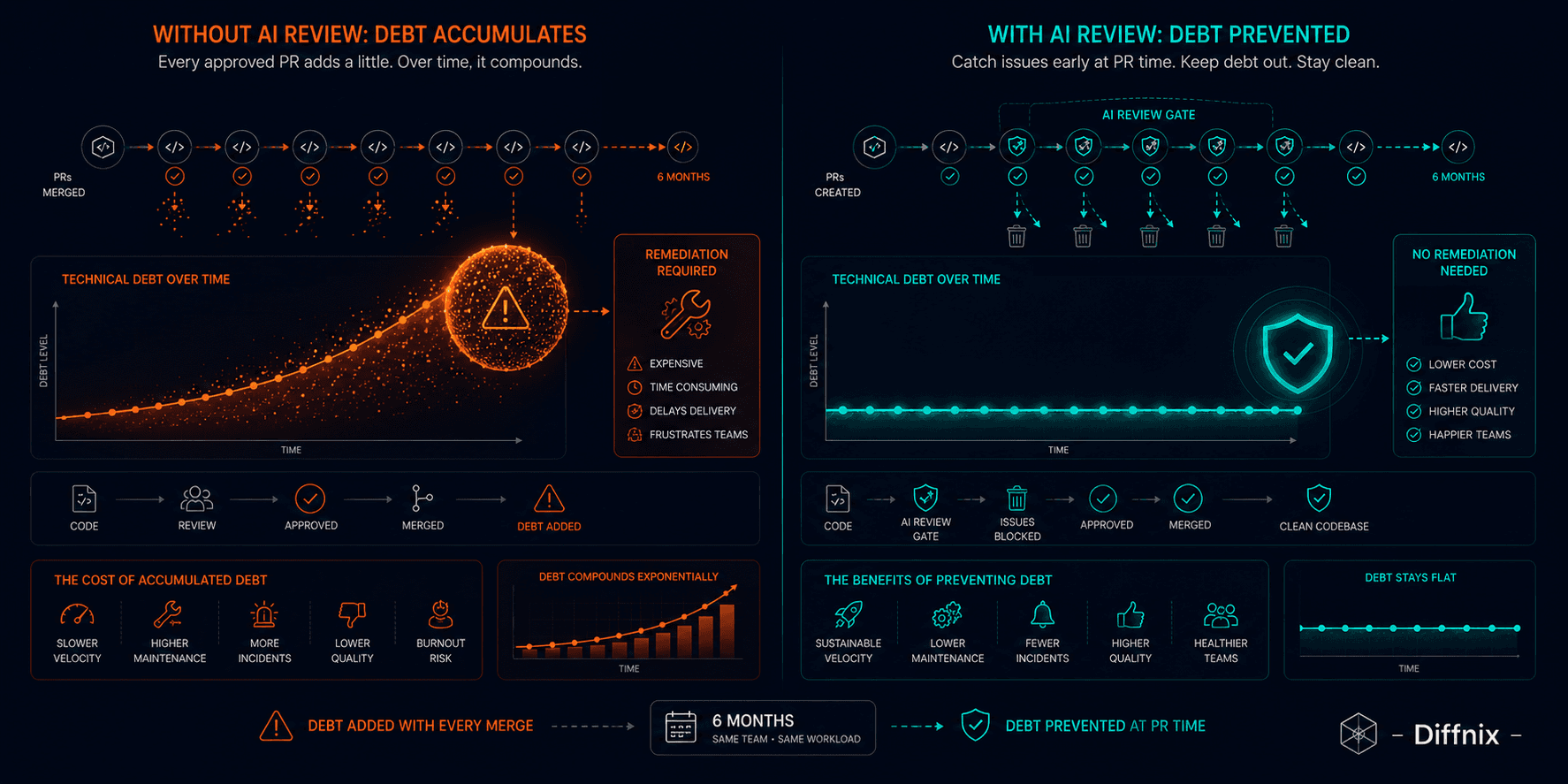
Most technical debt does not enter a codebase because developers cut corners. It enters because reviewers approve code that looks reasonable in isolation but creates compounding problems over time. This post explains where debt actually comes from, why inconsistent human review is the primary mechanism, and how AI-consistent review prevents the accumulation before it requires a sprint to fix.
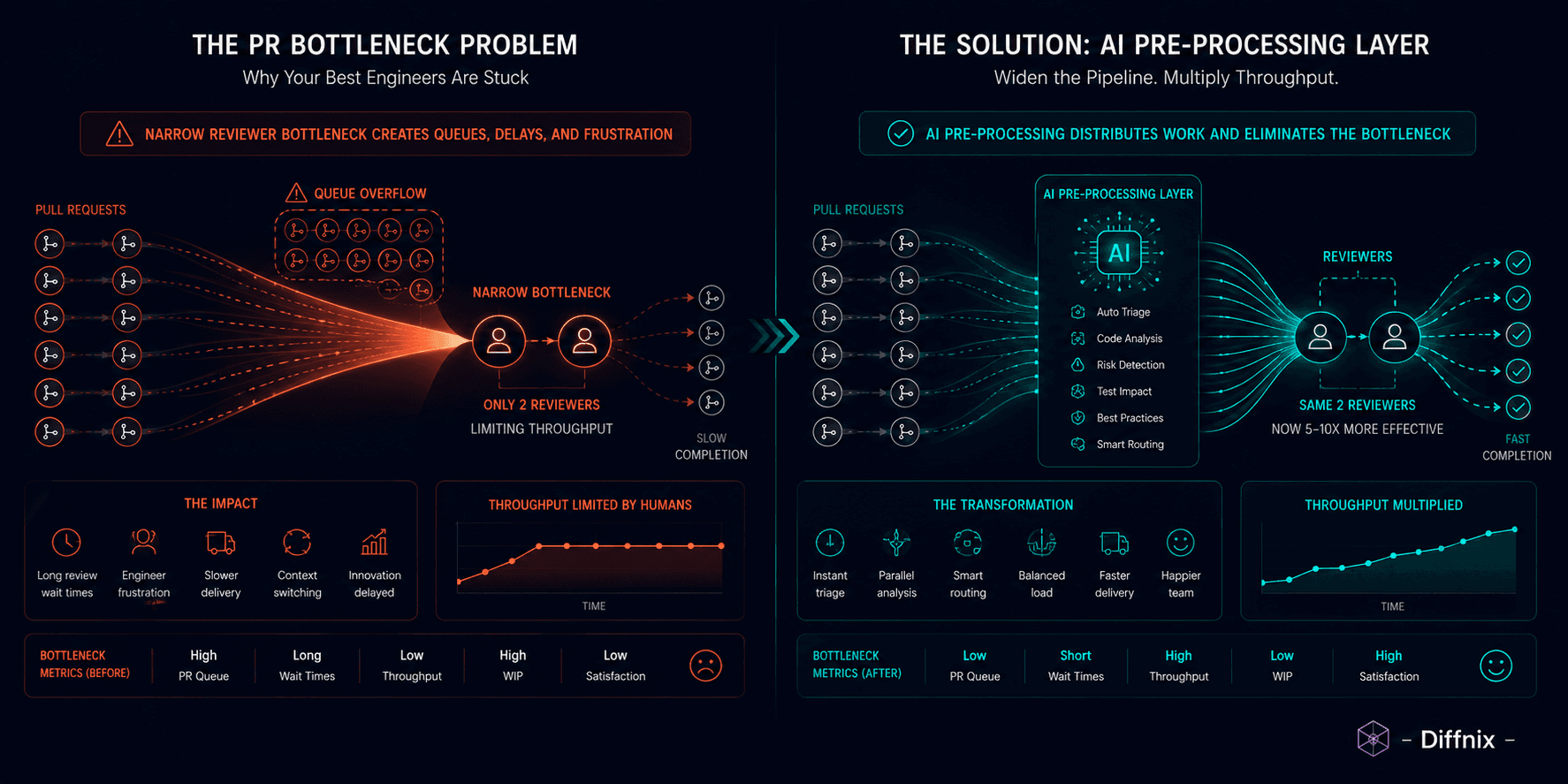
Two engineers reviewing 80% of all PRs is not a process problem. It is a structural one. This post explains exactly why review work concentrates at the top of engineering organizations, why the standard fixes do not work, and how AI first-pass review distributes the load without distributing the accountability.
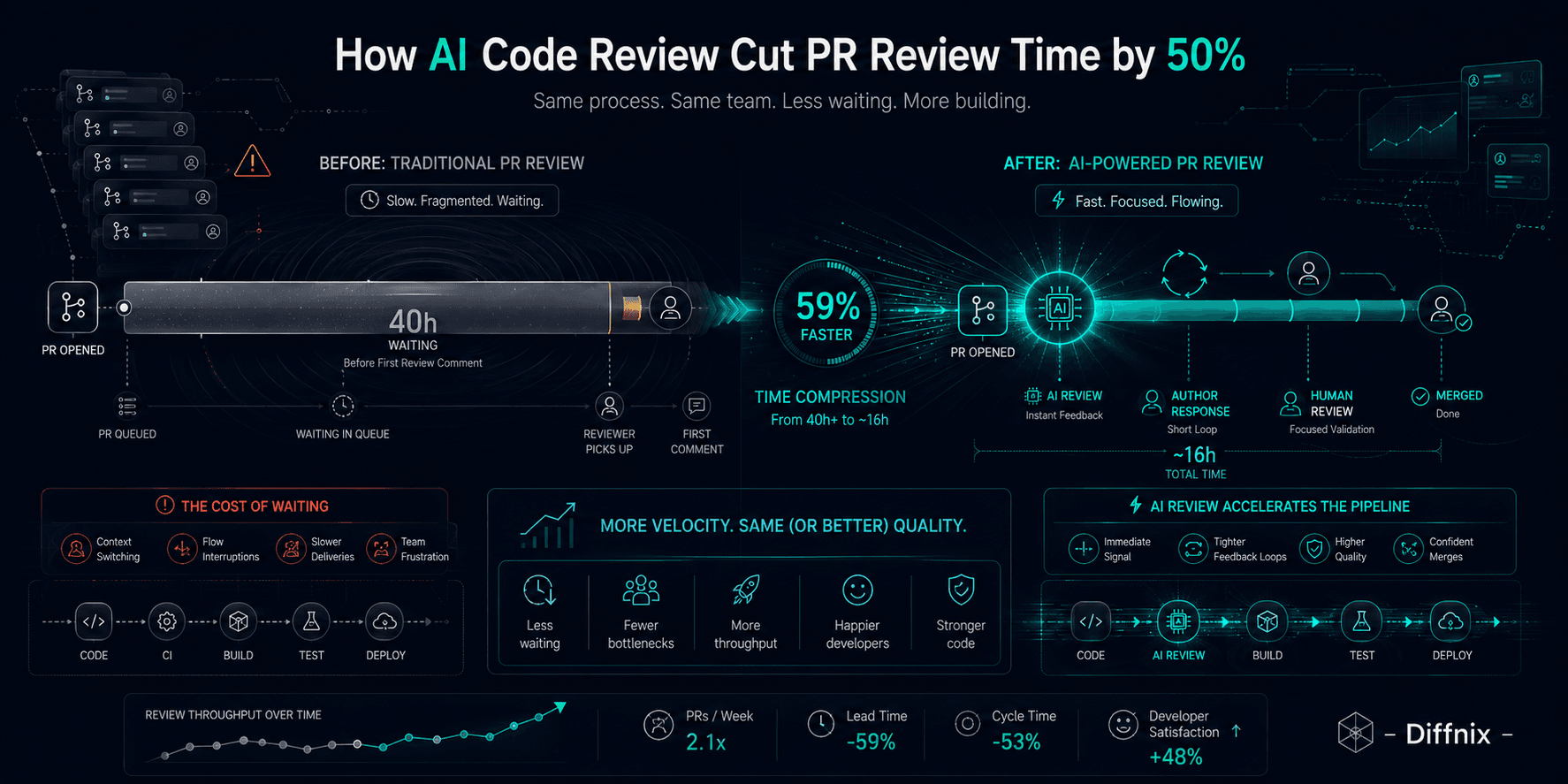
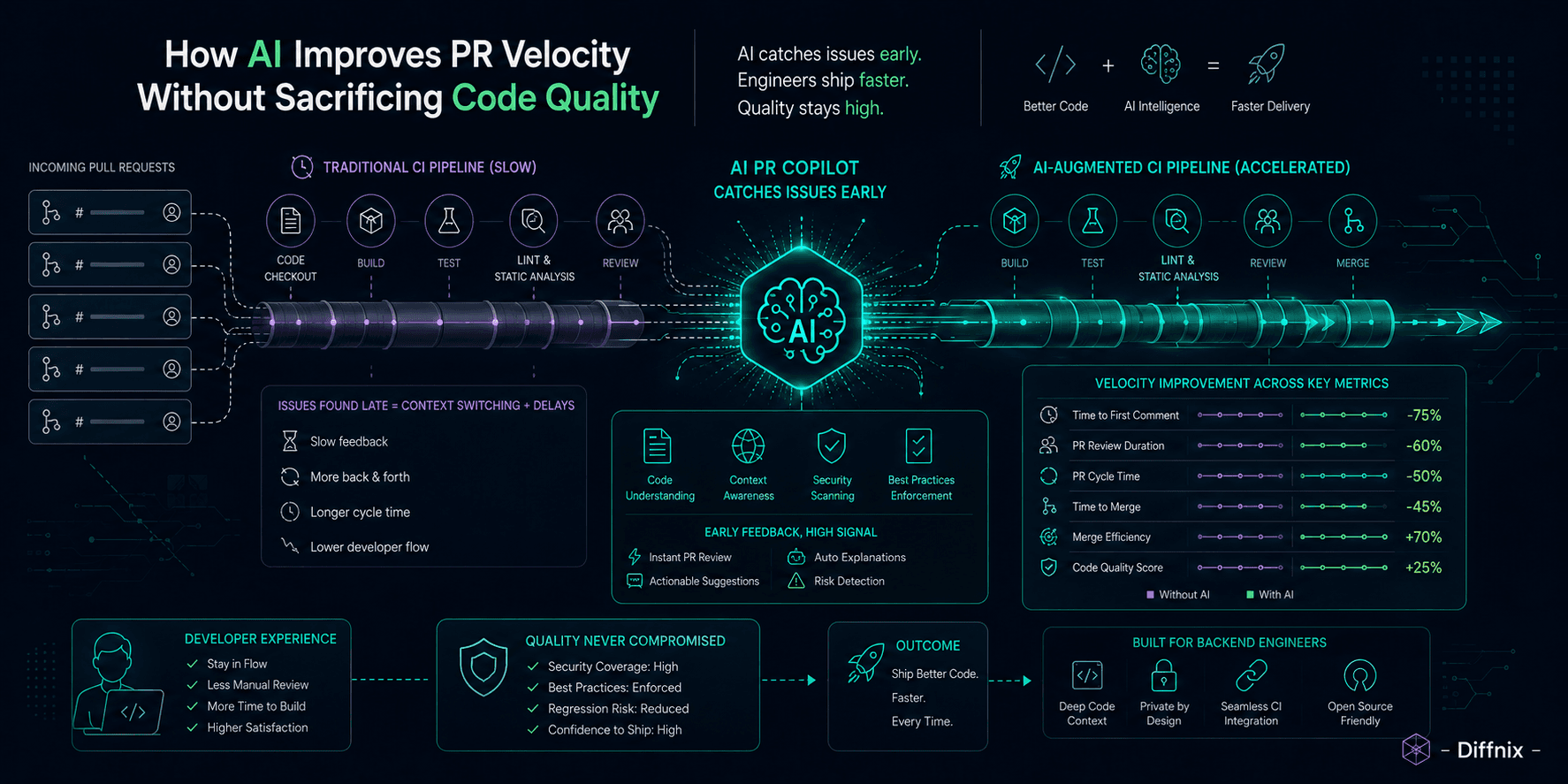
Cutting review time while maintaining quality sounds like a contradiction. It is not. This post walks through the exact workflow change that took one team's average PR review time from 47 hours to 19 hours, explains what caused the improvement, and shares the before-after metrics that prove quality held throughout.
The argument that velocity and quality are a tradeoff assumes human review is the only variable. It is not. This guide explains how AI code review at the PR stage breaks that tradeoff, what metrics actually measure velocity improvement, and how to implement it in a way that makes both your reviewers and your engineering leadership happy.
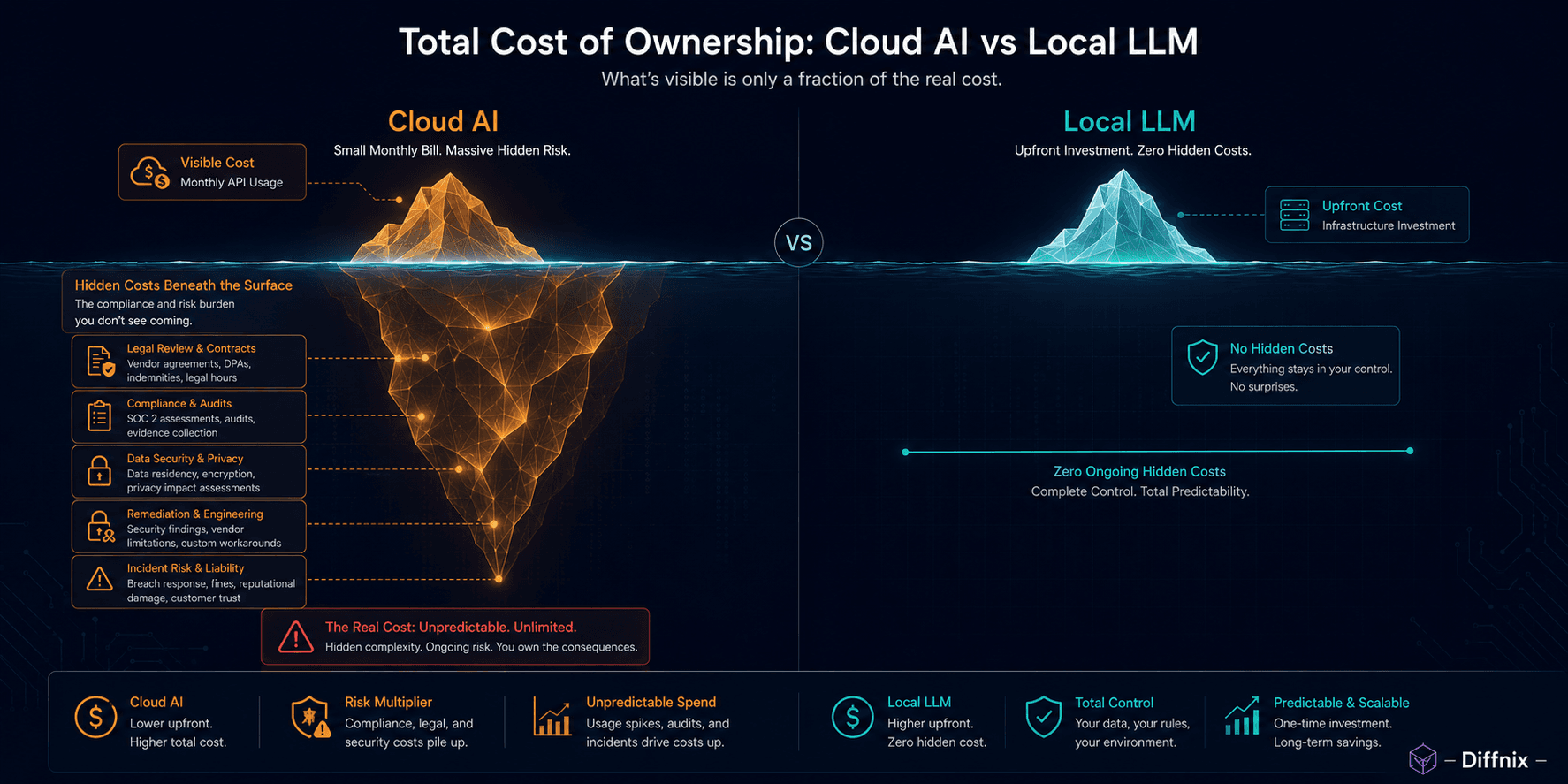
Most teams pick cloud AI review for convenience and call the privacy question a future problem. That calculation changes significantly when you run the actual numbers on compliance overhead and incident risk. This post makes the architecture comparison honest: where cloud wins, where local wins, and how to decide which trade-off is right for your organization.
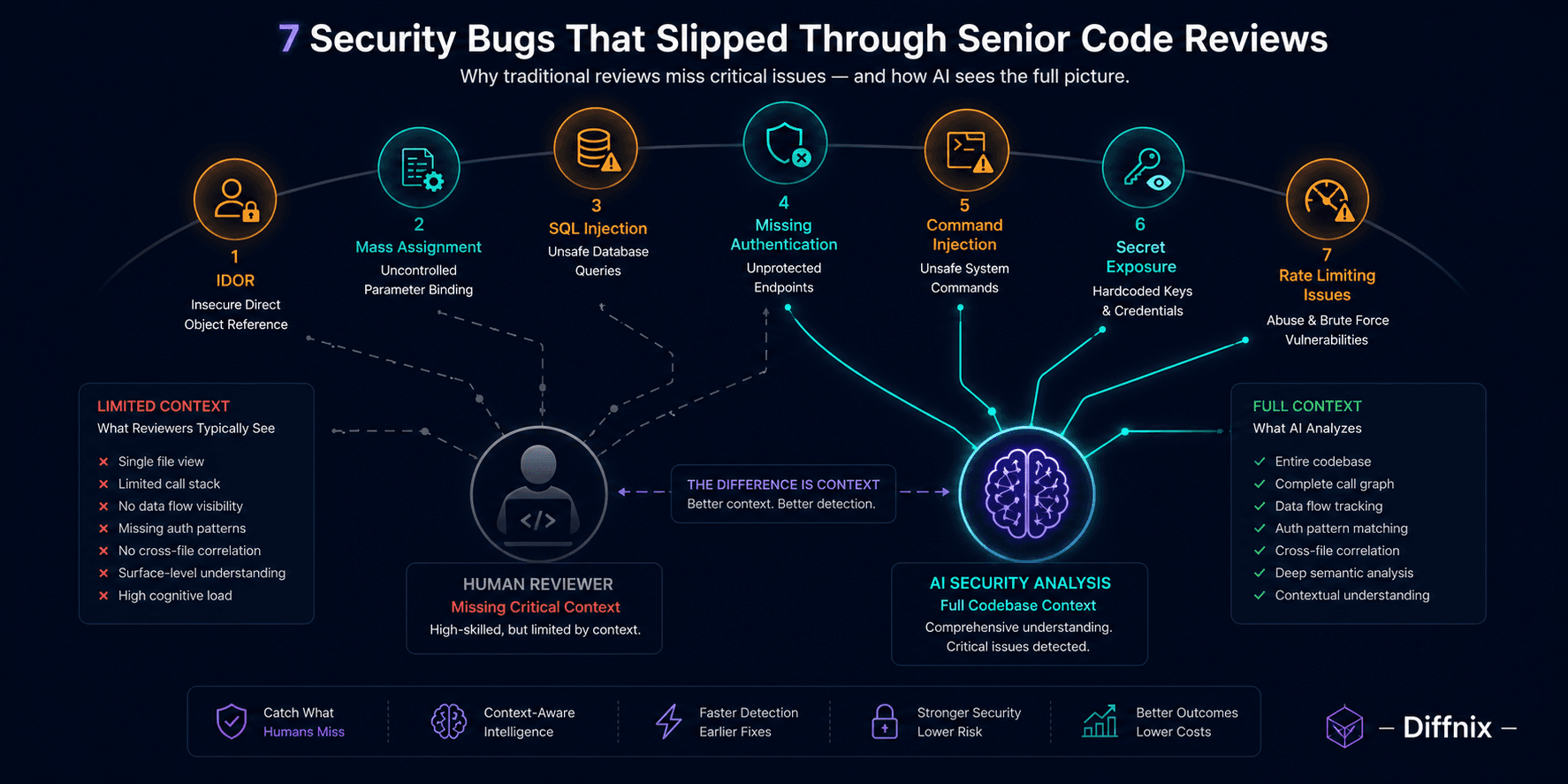
These are not examples of careless review. Every bug in this post was approved by a senior engineer who knew their codebase well. They slipped through because finding them required cross-file context that was not in the diff. This post shows each bug, explains exactly why reviewers missed it, and shows what AI semantic analysis saw that the reviewer could not.
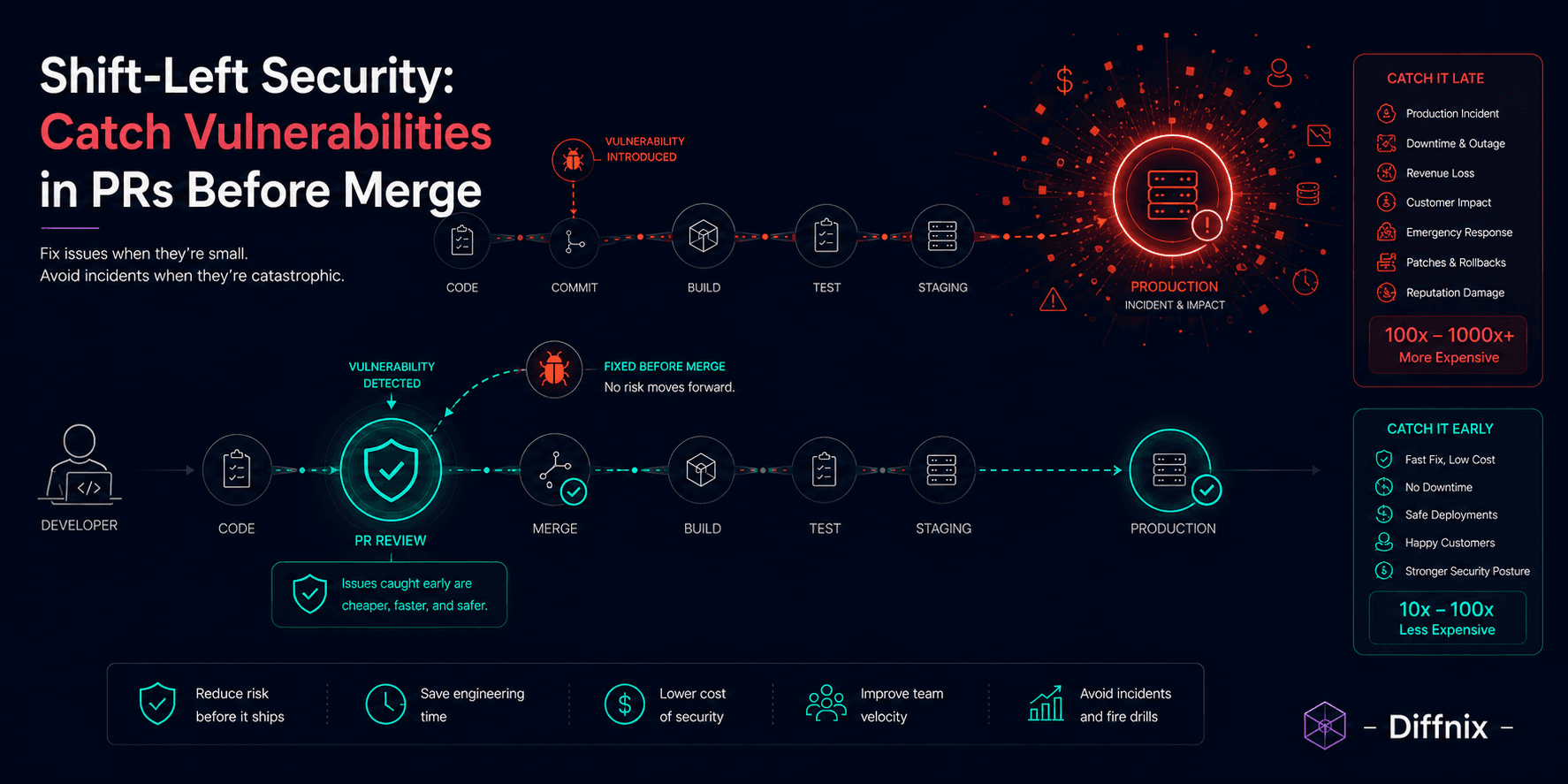
The most dangerous security vulnerabilities are not the ones that look dangerous. They look like legitimate code, pass static analysis, and get approved by senior engineers who were not looking for an authorization gap in an otherwise clean refactor. This post explains shift-left security at the PR stage, shows what AI review catches that SAST tools cannot, and walks through a real vulnerability that would have been a significant incident if it had not been caught at review.